
Create a Wallet
Prepare a private environment before generating or importing wallet credentials.
Read guide →A multi-chain wallet, blockchain network and Web3 knowledge hub from imtoken
Understand multi-chain assets, network selection, receiving and sending, DApp connections, token approvals and wallet security with practical guidance tied to verifiable on-chain behavior.
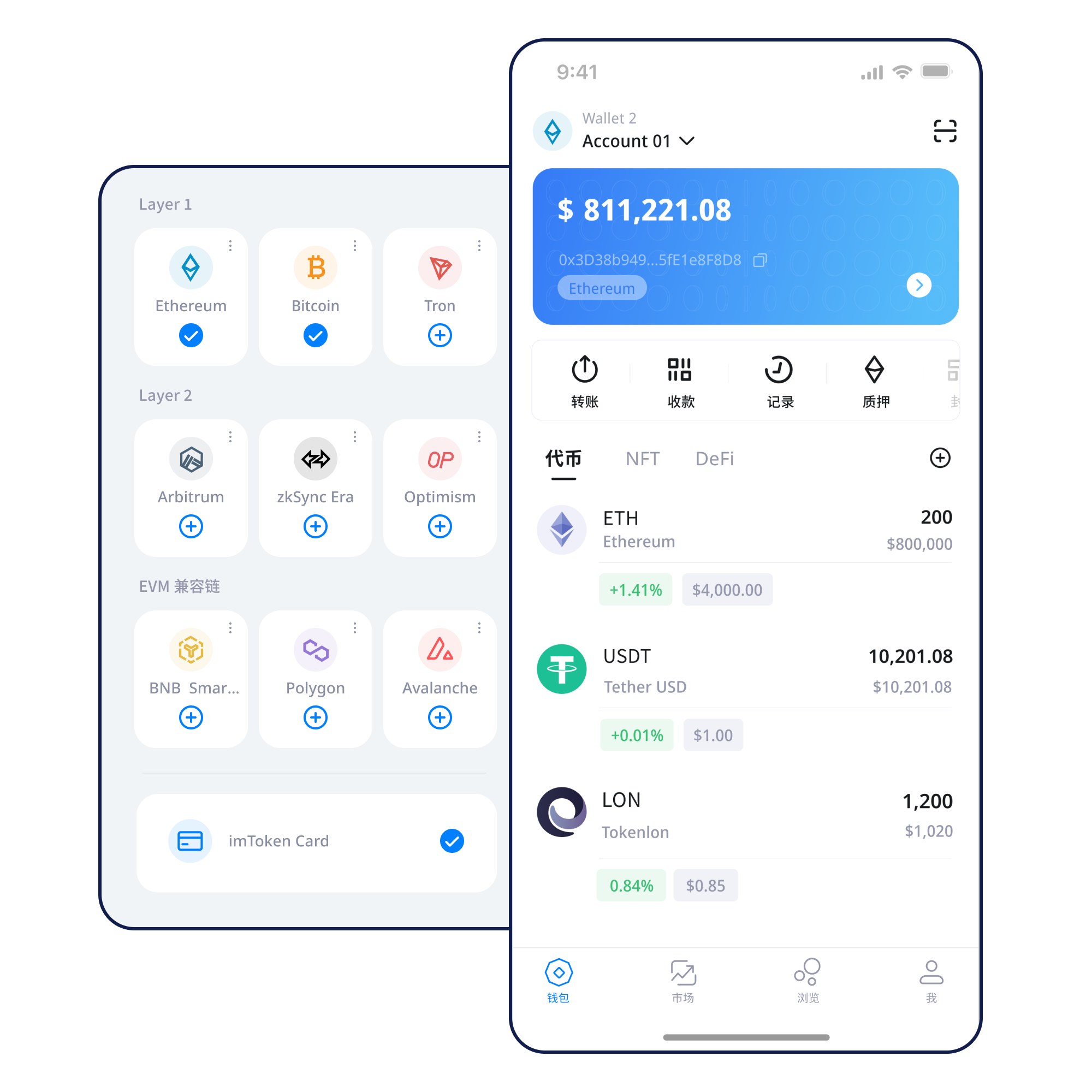
Prepare a private environment before generating or importing wallet credentials.
Read guide →Keep recovery material offline and separated from day-to-day devices.
Read guide →Match the receiving address with the exact network and asset.
Read guide →Check address, network, amount and estimated gas before signing.
Read guide →Verify the domain, then review each request separately.
Read guide →Different functions answer different questions: where assets are recorded, how transfers are signed, how DApps request permissions and how private credentials are protected.
Compare networks, verify addresses and track confirmation status before moving assets.
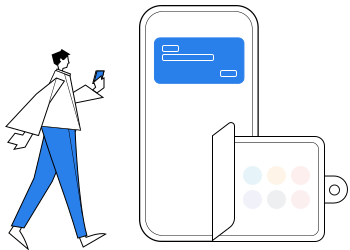
Review receiving addresses, networks, amounts, gas and transaction hashes as one complete flow.
Mobile asset viewing, network management, transaction history and DApp access.
Treat account requests, signatures, approvals and disconnect actions as separate decisions.
Keep seed phrases and private keys under your control and review every approval.
Understand multi-chain, public-chain, EVM, Layer 2, gas and confirmation concepts in context.
Each blockchain network maintains its own nodes, blocks and state. Even when two networks share a similar address format, their asset records and fee systems remain separate, which is why network selection must be verified before sending funds.
Nodes propagate transactions, blocks record state changes and later blocks build confirmations.
EVM-compatible networks can share address patterns while maintaining separate state and fee markets.
Cross-layer transfers can involve bridging, additional confirmations and waiting.
Gas or network fees compensate the network for processing and recording activity. The amount can vary with congestion, execution complexity and available block space, so a fee observed at one moment should never be treated as a permanent rate.
Move through creation, backup, network checks, transfers and approval review in a sequence that keeps sensitive credentials protected.
Keep each step verifiable before moving on.
Keep each step verifiable before moving on.
Keep each step verifiable before moving on.
Keep each step verifiable before moving on.
Keep each step verifiable before moving on.
Keep each step verifiable before moving on.
Web3
Connecting to a DApp creates an interaction channel and may reveal selected account information, but it is not blanket approval for every future request. Each signature, transaction or approval still needs its own review.
Open the Web3 guide →Security
Pre-transaction checks are more effective than trying to reverse an error after confirmation. Blockchain transfers are generally irreversible by the wallet alone, and third-party DApps and smart contracts can introduce independent risks that must be assessed separately.
Open Security Center →
Academy · Getting Started
The most useful way to learn wallet operations is to follow the order in which concepts appear in real use: understand addresses and keys first, then networks and fees, then receiving, sending and transaction verification.
Read the starter guide →Nodes, blocks and explorers help verify finality.
Understand gas, contracts and token interaction.
Learn settlement relationships and bridging.
Treat connections, signatures and approvals separately.
Protect credentials and reduce exposure.
Look up common terms in plain language.
Understand validators, reward sources, exits and network penalties before deciding whether staking fits your circumstances.
Proof of Stake and validator participation involve network state, reward distribution, exit mechanics and possible penalties. The mechanics should be understood before considering returns because reward levels and queue times can change with network conditions.
Learn staking mechanics →Staking does not guarantee returns, and digital asset prices can move independently of staking rewards. Validators may face network penalties, while smart contracts and third-party services introduce additional technical and operational risks.
Validator guide →Updates are presented by topic without inventing dates, partnerships or market claims.
Wallet operations are organized around real tasks.
Verify network and address before transfers.
Never share seed phrases, private keys or verification codes.
Validator content emphasizes variable rewards and risks.
Short answers to common wallet, network, Web3, security and staking questions.
An address is a public identifier used to receive assets on a specific network. It is not a seed phrase or private key.
Networks maintain separate state, so an address that looks valid can still be used on the wrong network.
Gas is the network fee for processing an on-chain action and can vary with network conditions.
No. Connection, signatures, transactions and approvals are separate requests.
No. Private keys and seed phrases remain under user control and should never be sent to support staff.
No. Rewards can change, exits may involve waits and validators, contracts and asset prices all carry risk.
Use the unified download entry. Never provide a seed phrase, private key or verification code during setup.